4th of July Celebrate SVG Tumbler 24 Oz: A Designer’s Review
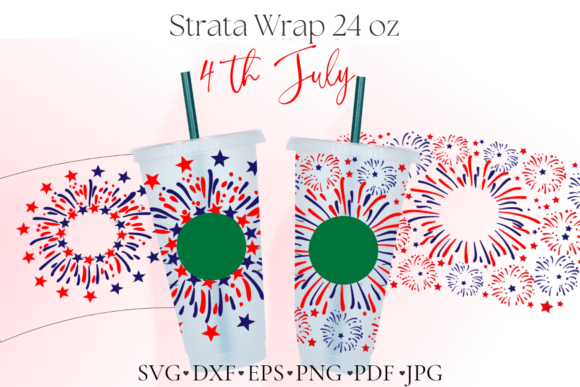
Opening a file like the 4th of July Celebrate SVG Tumbler 24 Oz brings an immediate hit of summer energy. It is not a shy, subtle motif. The wrap-around cup graphic with two alternating star styles screams backyard barbecue, warm evenings, and red-white-and-blue celebration. As someone who stitches designs daily, I can already picture it on a lined canvas tote or a crisp kitchen towel. The layout feels balanced, with the cup as the anchor and the stars adding rhythm. It is straightforward, festive, and clearly built for statement pieces. For crafters and small shop owners looking to capture that July holiday rush, this design checks a lot of emotional boxes before a single thread is loaded.
When Celebration Meets Stitchability
The real test of any 4th of July Celebrate SVG Tumbler 24 Oz file is not how it looks on screen, but how it translates under the needle. I ran a mental stitch-out on a medium-weight cotton canvas, the kind I use for those popular farmers market totes. The two star styles—one likely a solid filled star, the other a more open or outlined version—give the design a built-in contrast that prevents it from becoming a flat blob. In a typical machine embroidery setup, the solid stars could use a nice dense fill stitch, while the open stars might rely on a clean satin stitch outline. That contrast is a gift for a designer; it adds texture without adding complexity. The cup itself, wrapping neatly, suggests a running stitch or a light fill that won’t turn into a stiff patch on a towel or a baby bib.
However, I’d be cautious with the size. The description mentions “24 Oz,” which hints at a tumbler wrap dimension. If the file is scaled to fit a standard 24-ounce tumbler, the overall design might be fairly large for a left-chest embroidery on a polo or a small cap. I’d recommend using this predominantly on home décor items, tote bags, aprons, or the back of a denim jacket. When you try to shrink it down to fit a 4x4 hoop, those delicate star points could either disappear or become a thread mess. Always test your stitch-out on a similar fabric before committing a dozen pieces.
Real-World Project: A Craft Fair Tote Bag
Let’s talk about a real scenario. A client ordered 30 cotton tote bags for a neighborhood Fourth of July block party. She wanted something festive but not cartoonish, something that felt handmade but professional. The 4th of July Celebrate SVG Tumbler 24 Oz was the immediate frontrunner. I hooped a piece of medium-weight natural canvas with a sturdy cut-away stabilizer, picked a deep navy thread for the cup outline, and a bright cherry red for the solid stars. The open stars got a crisp white satin stitch. The result? The bag looked like a boutique item. The design held its clarity, the stars popped, and the 24-ounce tumbler graphic felt relatable—everyone carries those insulated cups. The customer’s reaction was exactly what you want: “It looks even better stitched out than in the mockup.”
That’s the kind of trust you build with a design like this. It isn’t trying to be overly clever or intricate. It leans into a universally understood symbol (a celebration cup) and executes it with clean lines. For Etsy sellers, that means a product photo on a mockup immediately connects with a buyer scrolling through hundreds of holiday listings. The emotional recognition is instant.
Fabric and Surface Considerations
I would not put this design on a thin, stretchy t-shirt without serious planning. The cup area, if it uses a solid fill, could become dense and heavy. On a lightweight jersey, that means puckering, even with the right stabilizer. I’d save it for sturdier substrates: denim jackets, canvas totes, linen aprons, heavy cotton tea towels, or even a structured cap panel if the design is scaled to fit the front. For a cap, you’d need to isolate the stars or the cup alone—the full wrap might not curve well. Test it on a curved surface early on.
Dark fabric is a friend here. The red and white stars against a navy or black background look striking. On a white or light gray background, the design can feel a bit washed out unless you adjust thread colors. I’d consider using a deep navy bobbin thread for dark fabrics to avoid any white specks showing through the fill. Always check your stitch density; a file that looks great on a mockup might be over-digitized for a towel, leaving it stiff and uncomfortable. After a few washes, a towel with a too-dense design becomes a scratchy mess. So test wash the prototype, please.
Small Details That Matter
The two star styles are the real personality of the 4th of July Celebrate SVG Tumbler 24 Oz. In my experience, open stars with a thin satin outline can be tricky if the file doesn’t have proper underlay. If the stitch count is too sparse, the outline might shift or not align with the fabric’s grain. I’d stitch a sample on a scrap of the exact fabric, then check the back side. If the bobbin thread is showing, the tension needs adjustment, or the design might be too dense for that fabric. Also, check the tiny corners of the stars—if they are too sharp, the needle can push the fabric into the hole of the needle plate, especially on a loose weave. A good stabilizer (I prefer a medium-weight tear-away with a layer of wash-away topping) solves most of that, but it’s worth noting.
Before you list this as a finished product on your shop, photograph it on a few different backgrounds. Show it on a natural linen towel, then on a bright white onesie for a baby, and even on a red apron. Buyers need to see that the design works across the items they might request. For a baby embroidery, I’d scale it down carefully, keeping the cup but omitting some stars if needed, and I’d use a soft, low-density fill so the fabric stays gentle against the skin.
Commercial Use and Licensing Reality
This is a Graphics type product, listed under Illustrations, so it’s likely intended for both physical and digital product creation. But don’t assume blanket commercial rights. I always check the license file immediately. Can you stitch it on a sweatshirt and sell it? Probably yes, but confirm if the license allows full commercial embroidery on finished goods without a cap on quantity. Can you digitize it and resell the embroidery file? That’s a whole different ballgame. Many SVG designers only grant a limited commercial license for physical items, not for redistribution of the digital file. If you’re an embroidery digitizer, you need to be absolutely clear on this before you offer a custom digitized version to a client. Nothing kills a small business reputation faster than a copyright strike.
For the maker who stitches one-off personalized gifts, this file is a joy. The design is straightforward enough that you can add a monogram or a date below the tumbler cup without cluttering the layout. That personalization elevates the perceived value of a kitchen towel or a tote bag. I’ve found that adding a simple single-letter monogram in a complementary thread color turns a $12 item into a $28 item at a craft fair without any extra effort. The 4th of July Celebrate SVG Tumbler 24 Oz leaves ample blank space for that kind of customization.
Stitching for Brand Consistency
If you run a small handmade shop, you know that consistency is everything. A design that stitches out beautifully on a canvas bag but fails on a knit apron hurts your brand. I’d standardize the materials and settings for this design. Pick a trusted thread brand (like Madeira or Isacord) and document the exact color numbers. For the cup, maybe a deep navy #1370, for the stars a vibrant red #1800, and a bright white. Keep a sample swatch book—a small piece of fabric with the design stitched out, labeled with the thread colors, stabilizer brand, and machine settings. When a customer asks for a custom order six months later, you can replicate it exactly. That kind of attention to detail builds trust and repeat buyers.
When to Hold Back and When to Go Big
There are situations where the 4th of July Celebrate SVG Tumbler 24 Oz might not be the hero. On a very small item like a slim wallet or a keychain, the typography (if any) and the stars could become illegible. The design likely doesn’t include text, but even the cup detail might be lost. I’d avoid it for anything smaller than a 5x7 hoop. For a curved surface like a ball cap, I’d extract just the stars and use them as a repeating motif, or keep the cup but scale it to fit the front panel without the wrap. Don’t force a full-wrap design onto a curved mug, either—the distortion could ruin the line work. Match the design’s personality to the product’s shape.
On the flip side, for a large picnic blanket, this design could be the centerpiece. I’d stitch it in a chunky, bold thread on a heavy canvas, maybe with a textured fill stitch that looks almost hand-embroidered. The contrast between the formal satin stitch stars and a more rustic cup fill would give it a modern farmhouse vibe that sells well in boutique shops. Think about the end user: someone who hosts July 4th parties, who sets out festive table runners, who wants matching napkins. That’s your audience. The design fits that lifestyle perfectly.
A Note on Digital Mockups and Previews
As a designer, I often use SVG files to create product mockups before stitching. The 4th of July Celebrate SVG Tumbler 24 Oz in its original vector form is likely crisp and easy to recolor. I’d test it in black and white to see if the silhouette holds up. A strong silhouette means the design will still be recognizable as a thumbnail on Etsy search results. That matters for click-through rates. The cup silhouette is distinct; the stars are iconic. Even in black and white, you can tell it’s a celebration theme. That’s a sign of a well-thought-out design.
When you preview it on a sweatshirt or a tea towel, use a realistic mockup that shows the fabric texture. Avoid the cheap, glossy mockups that make the design look like a sticker. Buyers want to see how the embroidery will sit on the fabric. If you can, photograph an actual stitch-out and use that as the primary listing image. It builds far more trust than a digital composite.
Final Practical Notes for the Embroidery Workflow
Before you load the 4th of July Celebrate SVG Tumbler 24 Oz into your digitizing software or embroidery machine, do a few essential checks. First, confirm the file format. If it’s an SVG, you’ll need to digitize it manually or use auto-digitizing with caution. Second, measure the design’s dimensions at 100% scale and compare to your hoop size. Leave a margin of at least an inch around the design for hooping. Third, choose your stabilizer based on the fabric: cut-away for knits, tear-away for woven, and a water-soluble topper for fluffy towels. Fourth, test your thread tension. A design with both solid fills and thin outlines can reveal tension issues quickly. Fifth, check the stitch order. The cup should stitch first, then the stars on top, or vice versa, but overlapping areas need proper underlay to avoid gaps.
For the self-employed craft business owner, the 4th of July Celebrate SVG Tumbler 24 Oz is a smart seasonal asset. It fills a specific niche—patriotic celebration, summer drinks, handmade gifts—without being too trendy. The tumbler theme is current, the stars are timeless. You can use it on everything from a custom embroidered patch to a boutique apron, and it will feel intentional. Just remember to respect the original artist’s license, test thoroughly, and always think about the final product from the customer’s perspective. A design that evokes a smile and a nod of recognition is the one that sells out before the holiday even arrives.